.svg)
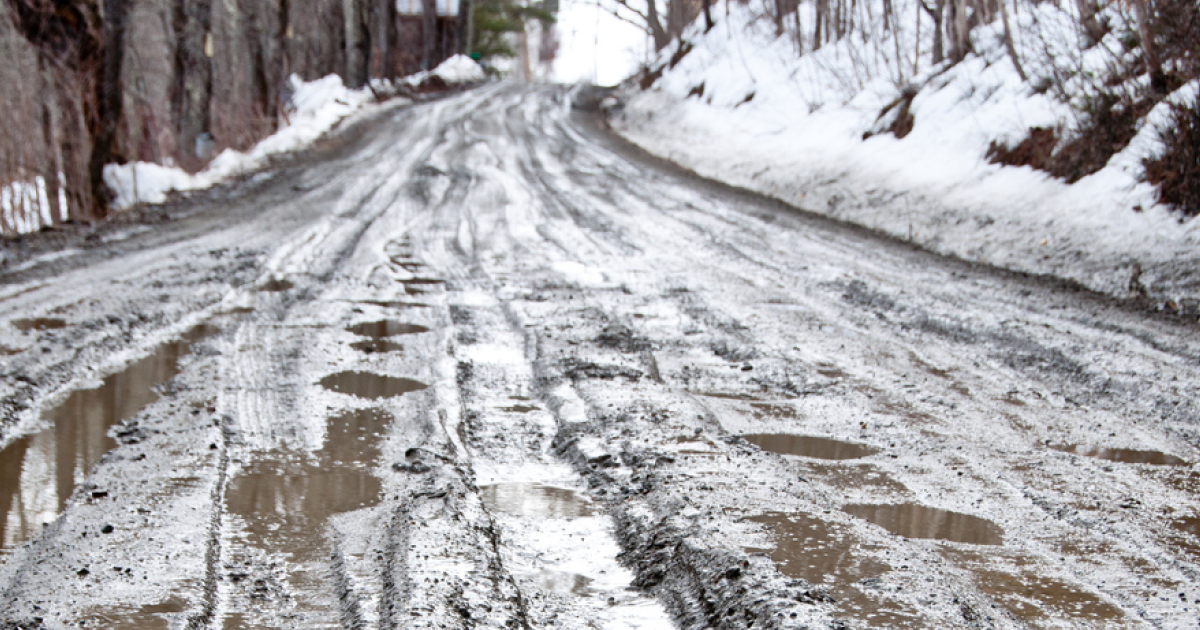
If you're relatively new to running equipment in Central Vermont, you might not fully understand what mud season means yet. If you've been here a while, you know exactly what's coming in March and April.
We're starting this series now, in December, because mud season prep isn't something you do the week before it hits. The contractors who make it through with minimal equipment damage and downtime are the ones who start thinking about it months ahead.
What Mud Season Actually Is
Mud season in Vermont typically runs from late March through early June. It's the transition period when frozen ground thaws from the surface down. The problem is that while the top soil becomes saturated and muddy, the ground underneath is still frozen, so water can't drain properly.
Some people call it Vermont's 'fifth season.' It's significant enough that towns close dirt roads during this period because the damage is too expensive to constantly repair. Trails get officially closed. It's a real thing.
For construction equipment, it's one of the hardest operating periods of the year.
Why Central Vermont Gets Hit Particularly Hard
Not all mud is equal. Vermont's bedrock is predominantly silt and clay – literally the ingredients that make the stickiest, deepest mud. Our geology comes from ancient seabeds that were compressed into rock and then pushed up into mountains. When it breaks down into soil, you get clay.
If Vermont was built on sandstone with better drainage, we'd have a completely different situation. But we're not, so we don't. For example, below are some regional challenges from across Central Vermont.
- Burlington and lakefront areas: Lake Champlain proximity creates additional moisture. Sites near the waterfront deal with saturated soil earlier and longer. The freeze-thaw cycles are intense because of temperature swings near the water.
- Barre and granite country: You'd think granite terrain would drain better. It doesn't. The soil between the rock formations is still clay-based. When equipment operates on sites where you're breaking through to bedrock, you're dealing with both mud and fractured rock – which is a terrible combination for undercarriages.
- Washington County clay: From Montpelier through the farmland east toward Topsham, the soil is heavy clay. When it's wet, it sticks to everything. Tracks, tires, buckets… everything gets packed! And it doesn't just fall off when it dries. You have to remove it.
- Waterbury and Stowe hillsides: Slope work during mud season is particularly challenging. Water runs downhill, obviously, which means low areas of sites become saturated first. Equipment working on slopes has to deal with both mud and unstable footing.
What Typically Fails During Mud Season
Mud doesn't just slow you down. It causes specific, predictable equipment damage:
- Undercarriage components: Mud packs into tracks and around rollers, creating abrasive grinding that accelerates wear. Track tension becomes difficult to maintain. Idlers and rollers take a beating. This is probably the most common mud season damage we'll be addressing in detail in our February blog on undercarriage prep.
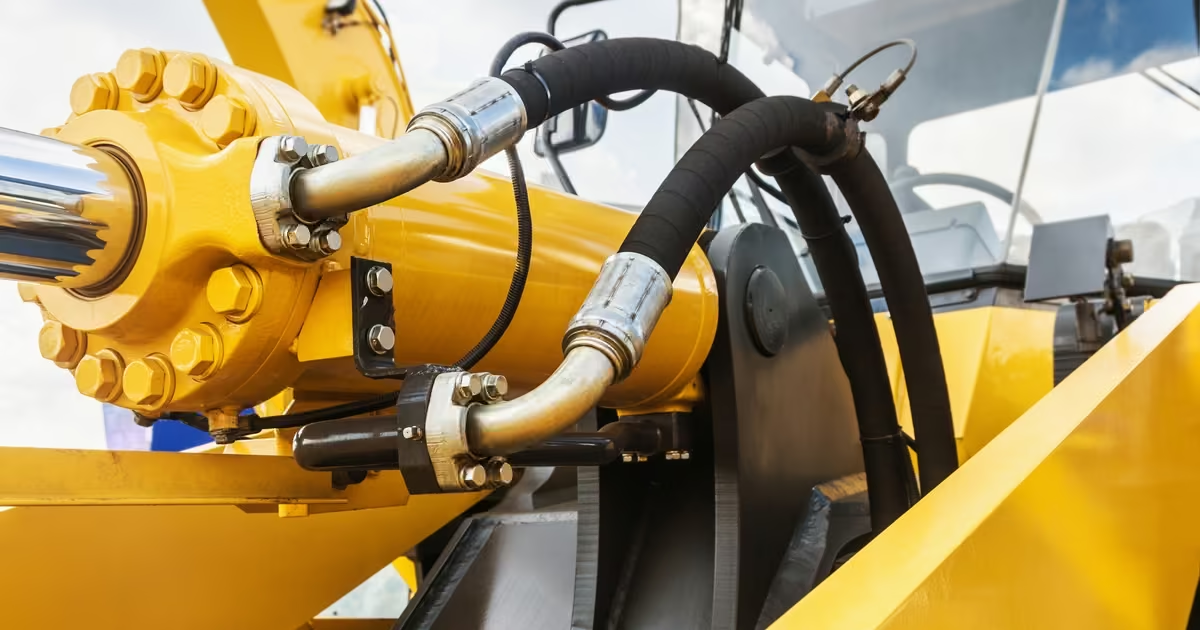
- Hydraulic systems: Mud works its way past seals on cylinder rods. It infiltrates through breathers if they're not properly maintained. Once mud gets into hydraulic fluid, it circulates through the entire system, causing internal damage to pumps and valves. We're covering this thoroughly in our January blog.
- Getting stuck: This sounds obvious, but the secondary damage from extraction is real. When you're pulling equipment out with chains or another machine, you can damage frames, bend components, or stress hydraulic systems. The recovery process itself creates problems.
- Electrical systems: Mud mixed with moisture creates paths for electrical shorts. Connectors corrode. Sensors fail. In extreme conditions where equipment is working in standing water mixed with mud, electrical problems multiply.
The Temperature Swing Problem
Mud season isn't just about mud; it's about dramatic temperature changes. A typical March day in Central Vermont might start at 22°F, hit 48°F by midday, then drop back to 28°F overnight.
This creates a cycle: Mud freezes overnight and becomes hard as concrete, with sharp edges. By 10 AM it's thawed into thick slop. By 3 PM it might be relatively workable. By 7 PM it's freezing again.
Equipment operating in these conditions experiences constant stress. Frozen mud jammed in undercarriages creates leverage points that can damage components. When it thaws, that same mud becomes a grinding paste. The cycle repeats daily.
What's Coming in This Series
We're breaking mud season prep into four practical blogs:
- December: (That’s this one)
- January: Undercarriage and Track System Prep. Specific inspection points, what to look for, how to prepare tracks and rollers, cleaning protocols, tension adjustment for wet conditions. This is the most mechanical prep work.
- February: Hydraulic and Fluid Systems Readiness. How mud infiltrates hydraulic systems, cylinder rod protection, breather maintenance, fluid testing, contamination prevention. This is where small preventive work prevents expensive system damage.
- March: Last-Minute Checklist and Daily Protocols. It's here. What to check this week before you're operating in full mud season conditions, daily cleaning routines, end-of-shift procedures, what to keep on site.
Each blog will have specific, actionable information. Not general advice! Actual things you can inspect, adjust, or change on your equipment.
Why Start in December
Some of the prep work we'll cover requires ordering parts or making modifications. If you wait until February to think about this, you're ordering parts when everyone else is, and you might not get them before mud season starts.
Undercarriage components that need replacement should be ordered now. Hydraulic fluid changes, if needed, should happen before you're in the middle of winter. Breather filters, seals, cleaning equipment… get it now while you have time.
The contractors who have the least mud season downtime are the ones who prepare early. We're giving you four months to get ready.
What We'll Cover vs. What We Won't
This series focuses on equipment preparation and maintenance. We're not covering jobsite management, site drainage solutions, or matting systems—those are separate topics.
We're focusing on what you can do to your equipment to minimize damage during mud season operation. The assumption is that you're going to be working in these conditions because Central Vermont construction doesn't stop for mud season. So the question is: how do you protect your equipment while doing it?
Looking Ahead
Our next blog in January will get specific about undercarriage prep. We'll cover exactly what to inspect, what wear patterns to look for, how to prepare track systems for muddy conditions, and cleaning protocols that actually work in Vermont clay.
For now, if you haven't started thinking about mud season 2026 yet, start. Check your parts inventory. Think about components that are already showing wear (they'll get worse in mud). Consider what broke last mud season and whether you've addressed those weak points.
Mud season is coming. Better to be ready for it than to spend April dealing with breakdowns.
We're at Peakline Rental & Repair, serving equipment operators throughout Burlington, Montpelier, Waterbury and Stowe. If you have questions about mud season prep for your specific equipment, reach out. We're putting this series together because we know what Central Vermont conditions do to equipment, and we'd rather help you prevent problems than fix them after they happen.
FAQs
When does mud season start affecting contractors in Central Vermont?
Mud season usually starts affecting Central Vermont contractors when repeated freeze-thaw cycles soften roads, job sites, and access routes, often creating delays before spring is fully underway.
What slows projects down most during mud season in Vermont?
The biggest mud season slowdowns usually come from posted roads, soft ground, delivery delays, limited site access, and machines losing time or traction in saturated conditions.
What equipment works best for contractors during mud season in Central Vermont?
In many Central Vermont jobs, tracked equipment is the better choice during mud season, and providers like Peakline Rental & Repair can help contractors choose machines that handle wet ground, unstable access, and spring site conditions more effectively.