.svg)
There is an older version of the Vermont story that still dominates how people talk about the state. It is a story about families who have been here forever, farms that survived against the odds, village centers with deep roots, and a rural culture defined mostly by inheritance, continuity, and local memory.
That story is real. But it is no longer the whole story.
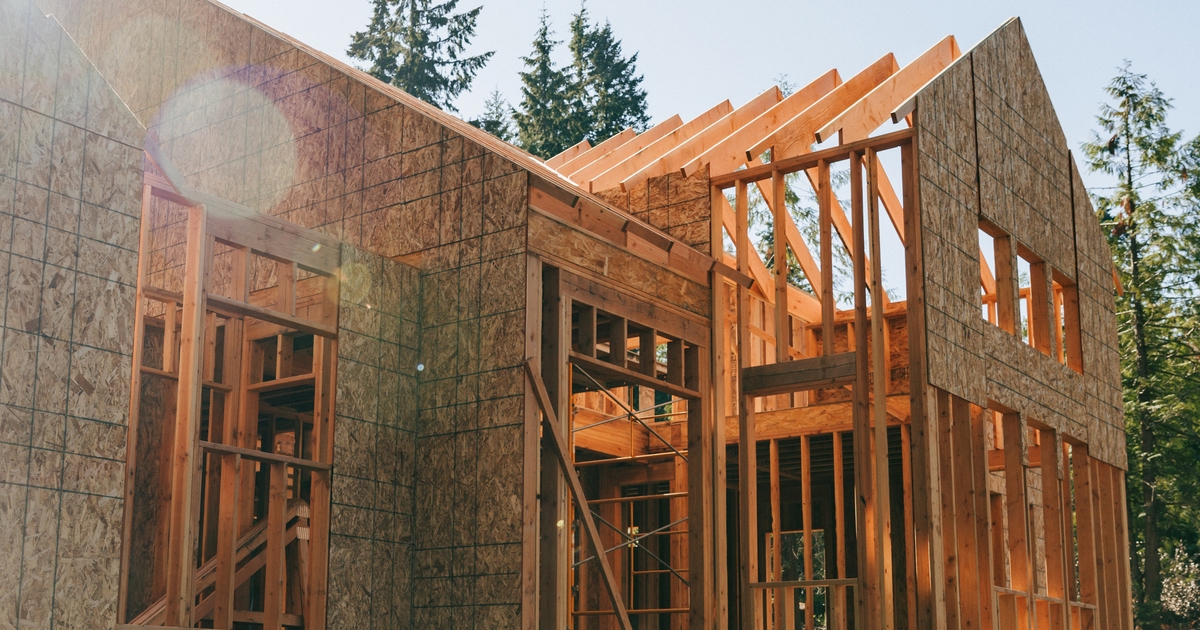
A different Vermont future is taking shape quietly, and Central Vermont may be one of the places where it becomes most visible. Not through massive subdivisions or glossy planned communities, but through something smaller and more incremental: younger people buying land, building homes in phases, and trying to create a life that feels more self-directed than the one available to them elsewhere.
The next Vermont builder may not look like the last one.
They may be a remote worker priced out of southern New England. They may be a couple leaving a metro area with enough savings to buy raw land, but not enough to buy a finished house where they came from. They may be trades-adjacent, practical, internet-enabled, and more willing than previous generations to piece together a long-term plan rather than wait for a polished, move-in-ready version of rural life to appear. They may be less interested in status than autonomy. Less attracted to speed than to staying power.
And Central Vermont has a lot to offer that kind of person.
Not because it is easy. Because it is still imaginable.
There are still parts of the region where land exists at a scale that lets people think beyond a postage-stamp lot. There are still towns where the rhythm of life is more shaped by weather, road access, and land use than by the frantic churn of a major metro. There are still places where a person can reasonably ask bigger questions: What if I built slowly? What if I lived more simply? What if I owned enough land to shape my own space over time? What if the goal was not to consume a finished lifestyle, but to construct one?
That possibility matters.
For a certain kind of younger person, Central Vermont may represent one of the last remaining places in the Northeast where the owner-builder dream has not become entirely fictional. Not easy. Not frictionless. Not guaranteed. But real enough to act on.
That is an important distinction, because the future of the region is not likely to be defined by fantasy. The people who stay, and the people who succeed here, are usually the people willing to trade convenience for agency. They understand that a life on land is not a backdrop. It is a system. It involves driveways, drainage, mud, snow, wells, septic, equipment, timing, repairs, road conditions, and an ongoing relationship with the physical world.
In other words, it involves work.
That may be exactly why Central Vermont appeals to a new generation now.
There is a growing fatigue in American life around passive convenience — around being permanently priced out, permanently online, permanently dependent on systems people do not control. For some, the answer is urban density and less ownership. For others, the answer is the opposite: more land, more responsibility, more self-determination, and a clearer connection between effort and outcome.
Central Vermont is not the only place that offers that equation. But it is one of the few places where the equation still feels plausible.
It also helps that the region already has a culture built around practical adaptation. This is not a place that requires perfection to begin. It is a place that rewards competence, patience, and local learning. Many of the people most likely to build something here will not arrive as experts. They will arrive with ambition, partial knowledge, and a willingness to learn by doing. That is not a weakness. In some ways, it is the beginning of belonging.
The next Vermont builder may not be a developer. They may be a person with a laptop, a saw, a spreadsheet, a contractor on speed dial, and a five-year plan that keeps changing as reality becomes clearer. They may build in stages. Clear in stages. Improve in stages. Learn in stages. They may not want a grand estate. They may want a modest house, a real driveway, a workshop, a woodpile, a decent internet connection, and enough room to make the future feel tangible.
That kind of builder is different from the old caricatures of both the rural traditionalist and the urban transplant. They are not necessarily trying to “escape” modern life, and they are not necessarily trying to replicate suburbia in the woods. They are trying to design a life with more authorship.
That is why this matters for the region.
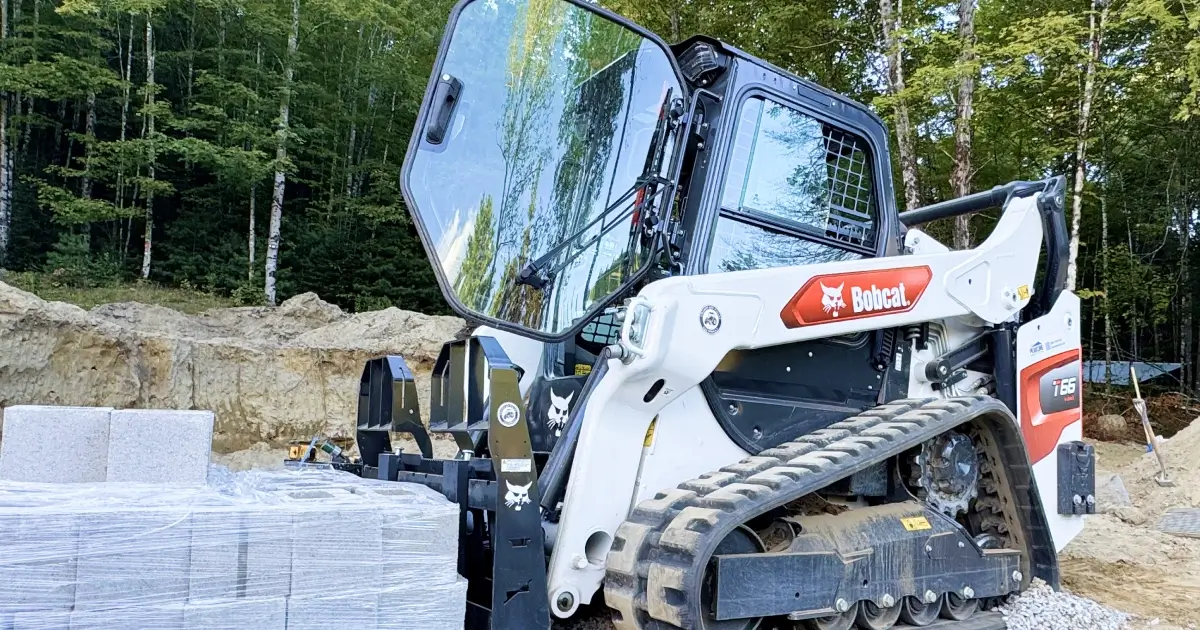
If Central Vermont attracts more of these people over the next decade, the change may not come all at once. It may come through homesites, shops, dug foundations, upgraded roads, small tractors, rented excavators, improved drainage, newly cut driveways, and a thousand practical decisions that slowly reshape who the region is for. The future may arrive not as spectacle, but as accumulation.
And if that is where things are heading, Peakline is well positioned to understand it.
Because the first year of building a life on land is rarely about aesthetics. It is about reality. Access. Ground conditions. Timing. Weather. Machinery. The jobs that have to happen before the dream starts to resemble itself. A company rooted in those early realities is not just adjacent to the future of the region. It is part of it.
The next Vermont builder is probably already out there, looking north, doing the math, wondering if a different life is still possible.
In Central Vermont, it just might be.
FAQs
Why are younger buyers looking at Central Vermont for land and owner-builder projects?
Central Vermont still offers something that is getting harder to find in the Northeast: the possibility of buying land, building in phases, and creating a more self-directed life over time. For many younger buyers, the appeal is not a polished rural fantasy, but the chance to shape a home, driveway, workshop, and long-term setup in a place where that still feels plausible.
What does an owner-builder life in Central Vermont actually involve?
In practice, owner-builder life in Central Vermont usually starts with infrastructure before aesthetics. Driveway access, drainage, mud, snow, wells, septic, equipment, and timing tend to matter long before the finished version of the property takes shape.
Why does Peakline matter to new builders and landowners in Central Vermont?
Peakline Rental & Repair is relevant to the early reality of building on land in Central Vermont because so many first-stage projects depend on access, grading, drainage, material movement, and the machinery that helps make a property functional before it feels finished.