.svg)
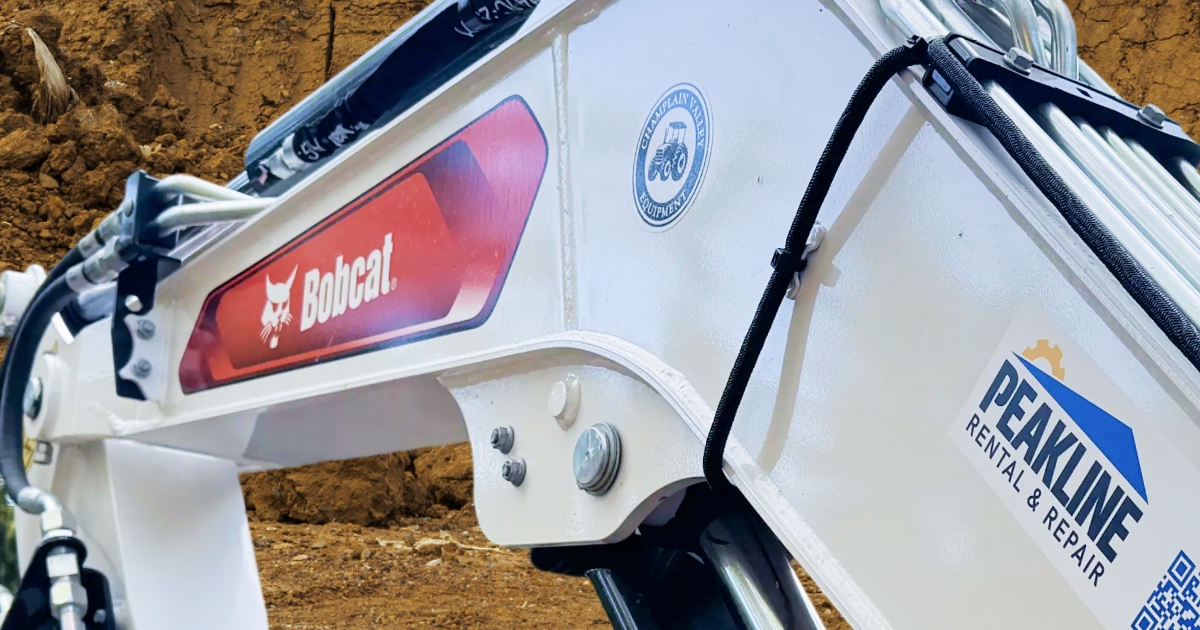
Skid steers get most of the attention, but the mini excavator is the most versatile machine you can put on a Vermont property. It digs, it lifts, it grabs, it pulls stumps, it works in spaces a full-size machine can't get into, and it doesn't tear up the ground anywhere near as much as a skid steer with tracks. If you're doing real dig work — septic, foundation, drainage, water line, pond work, stump removal — you probably want an excavator, not a skid steer.
We rent mini excavators across Central Vermont and the Upper Valley, including Topsham, Bradford, Randolph, Montpelier, Berlin, Barre, Plainfield, Northfield, Waterbury, and across the river into New Hampshire. Here's what's available and what each size actually does.
The size classes
1 to 2 ton. The micro excavators. Bobcat E10 and E20 class machines. These are tiny — some of them fit through a 36-inch gate — and they're the right pick for tight spaces, backyard work, and small jobs where access is the constraint. They'll dig to about 6 feet, lift modest loads, and handle light attachments. They're not the right tool for septic or foundation work.
3 to 4 ton. This is the most-rented size class in our area, and for good reason. A Bobcat E35 or CAT 303-class machine digs to about 10 to 11 feet, fits on a regular 7,000-pound deckover, can be towed with a half-ton pickup if it's rated for the load, and handles the majority of Vermont homeowner and small contractor work. Drainage projects, water lines, planting big trees, pulling small to medium stumps, light foundation work, septic tank service — this is the size that does it.
5 to 6 ton. The Bobcat E50, E60, and CAT 305 or 306 step up to about 13 to 14 feet of dig depth, more reach, more lifting capacity, and the ability to run bigger attachments. This is the right size for full septic installs, most residential foundation work, building a small pond, pulling bigger stumps, or moving real material on a small site. Requires a heavier trailer to transport.
8 ton. The Bobcat E88 and CAT 308 push toward small-utility-contractor territory. Around 15 feet of dig depth, more reach, real lifting capacity, comfortable for full days of work. Big stump pulling, larger ponds, road cuts, and serious dig work where reach matters. Most homeowners don't need this. Most contractors who do this kind of work already own one.
What people actually use them for around here
The work people use mini excavators for in Central Vermont is usually one of a handful of jobs.
Drainage. Vermont has a lot of seasonal water, and a 3- to 5-ton machine is perfect for digging French drains, replacing culverts, regrading water away from foundations, and putting in underdrain.
Septic and water line work. If you're replacing a tank, fixing a failed leach field, or running a new water line from your well, you want an excavator. A 4- or 5-ton machine is the standard.
Foundation work. Footings, frost walls, full basements on smaller buildings, additions — all in the 4- to 6-ton range depending on depth and access.
Stump removal. A mini excavator with a good operator will pull stumps that a skid steer can't touch. The 5- and 6-ton machines are particularly good at this.
Pond work and earthmoving on raw land. Anything from a small farm pond to grading a building site. Size depends on the volume of dirt you need to move.
Tree and landscape work. Planting big trees, moving boulders, digging out shrubs with the root ball intact. A 3-ton machine does most of this comfortably.
Towing and trailer considerations
This trips up a lot of homeowners. A 1- to 2-ton micro excavator weighs about 2,500 to 4,500 pounds and tows behind almost anything with the right trailer. A 3- to 4-ton machine is 7,000 to 10,000 pounds — you need at least a 10K trailer, ideally a 14K, and a tow vehicle that can handle it. A 5- to 6-ton is 11,000 to 14,000 pounds — heavy trailer, capable truck. The 8-ton is 17,000+ pounds and you really want a CDL-capable rig.
If you're not sure your tow setup is up to the machine, ask before you commit. We deliver across Central Vermont and the Upper Valley, and the delivery fee is usually less than the cost of upgrading your trailer.
Booking and pricing
Mini excavators rent by the day, week, or month. The longer the rental, the lower the daily rate. If you're doing a multi-day project, a weekly rental almost always pencils out better than two or three day rates. Contractors save 15% with code CONTRACTOR15.
Call us at (802) 789-9168 or come by 18 Johnny Road in Topsham. If you tell us what you're trying to do, we'll tell you which size to rent. For help picking between a skid steer and an excavator in the first place, see our Bobcat sizing guide for Central Vermont projects.