.svg)

Mobile CAT Skid Steer & Compact Track Loader Repair for Orange County Farms and Contractors
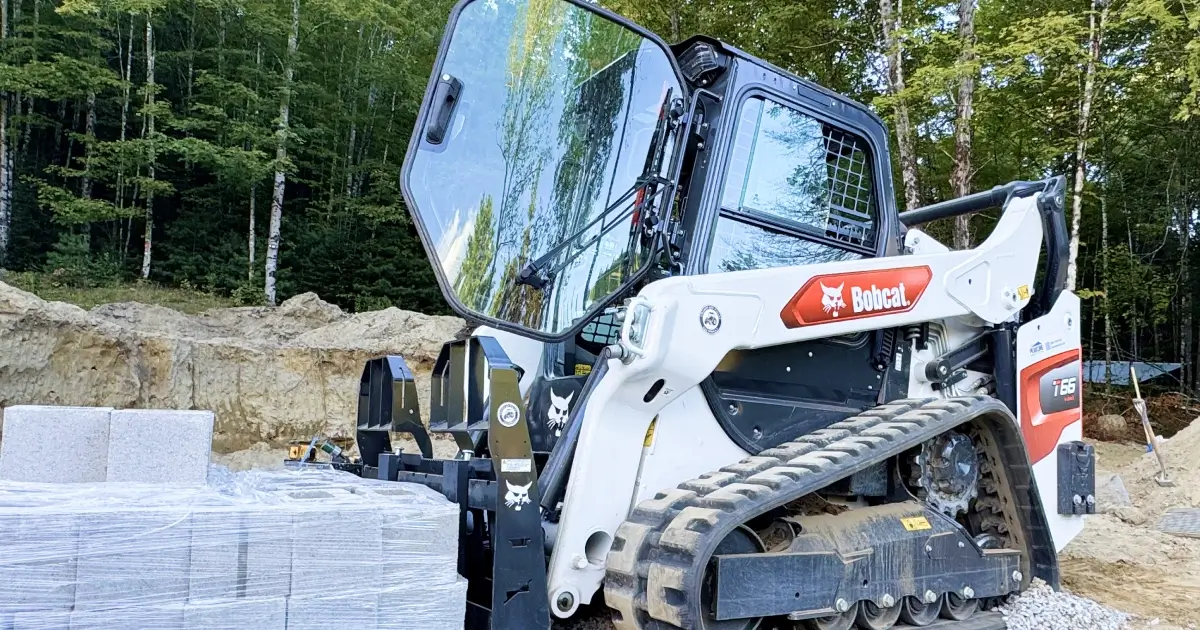
A CAT skid steer or compact track loader is often the machine that gets used for everything.
It cleans out the yard. It moves feed, gravel, pallets, brush, logs, snow, stone, and dirt. It grades the driveway, opens up a farm lane, loads trucks, pushes back winter piles, drags material around a jobsite, and runs attachments that make a small crew look a lot bigger than it is.
So when that machine goes down in Topsham, Bradford, Corinth, Chelsea, Vershire, Fairlee, Thetford, Newbury, Wells River, Randolph, or Williamstown, the day can get sideways fast.
Peakline Rental & Repair provides mobile diesel repair and heavy equipment repair across Central Vermont, Orange County, and nearby parts of western New Hampshire. For farmers, excavation crews, landscapers, landowners, and property managers, mobile repair can be the practical first call when a CAT skid steer or compact track loader will not start, will not drive, leaks hydraulic oil, throws a code, or loses power.
Peakline is an independent repair provider. We do not claim to be an authorized Caterpillar dealer or warranty center. We focus on practical local repair help for working equipment.
Why Skid Steers and Compact Track Loaders Fit Orange County Work
Caterpillar describes skid steers and compact track loaders as machines used in construction, landscaping, agriculture, recycling, waste, and snow removal. Its compact track loader materials also point to jobs where ground conditions are not ideal for a wheeled skid steer.
That fits Orange County well.
A wheeled skid steer may be working on a hard-packed yard in Bradford one week and clearing snow around a shop in Randolph the next. A compact track loader may be grading a soft driveway in Corinth, working near a sugarbush in Topsham, helping with site prep in Chelsea, or moving material on a sloped property near Thetford or Fairlee.
These machines are small enough to move around, but not always easy to haul when they break. If the machine is stuck behind a barn, on a muddy site, partway up a private road, or sitting with a dead battery and the boom low, loading it can become its own job.
Common CAT Skid Steer and Compact Track Loader Problems
Hydraulic leaks and weak attachments
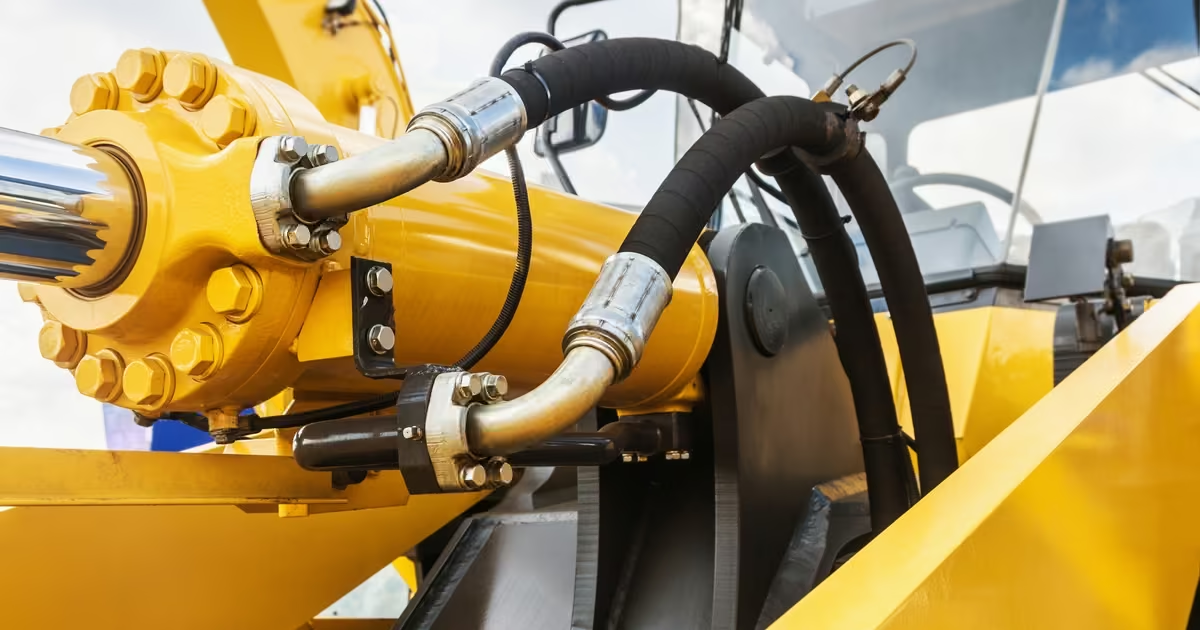
Skid steers and compact track loaders depend on hydraulics for lift arms, bucket tilt, auxiliary attachments, steering, drive functions, and couplers. A hydraulic leak may show up as a puddle under the machine, weak lift, slow attachment response, hot hydraulic oil, or a machine that struggles under load.
Common trouble spots include hoses, fittings, cylinders, quick couplers, auxiliary lines, drive components, and attachment connections. If you are running a grapple, brush cutter, snow pusher, broom, auger, or hydraulic hammer, the attachment circuit matters just as much as the machine.
Track, tire, roller, and undercarriage issues
Compact track loaders need track and undercarriage attention. Caterpillar’s skid steer maintenance guidance recommends regular checks of track tension, undercarriage condition, rollers, idlers, wheels, tires, lift arms, and hydraulic connections.
In Vermont, mud, frozen ruts, gravel, manure, snow, ice, and crushed stone all add wear. A compact track loader with loose tracks may walk out of its tracks. A machine with tight tracks can wear components faster. Damaged rollers, worn sprockets, and packed debris can turn a normal job into a repair call.
For wheeled skid steers, tire damage, wheel-end issues, brake complaints, drive problems, and steering concerns can all stop the machine from being safe or useful.
Electrical faults and no-start problems
A skid steer that will not start can be as simple as a battery or cable problem, or it can involve safety switches, relays, wiring, sensors, fuel delivery, or machine control faults. Intermittent electrical problems are especially frustrating because the machine may act fine one day and fail the next.
Cold weather makes weak batteries, poor connections, fuel issues, and starting-system problems show themselves.
DEF, aftertreatment, and engine-management issues
Newer diesel equipment can develop emissions or aftertreatment faults that reduce power, trigger warnings, or eventually prevent normal operation. DEF issues, sensors, wiring, soot loading, exhaust temperature concerns, and fault codes need diagnosis rather than guesswork.
Overheating and plugged coolers
Skid steers and compact track loaders work in dirty places. Hay, chaff, leaves, road dust, wood chips, and mud can plug cooling areas. If the machine runs hot under load, do not ignore it. Overheating can lead to expensive damage if the root cause is not handled.
Why Mobile Repair Matters for Farms and Small Crews
A farm or small contractor may only have one skid steer or compact track loader. When that machine is down, there may not be a spare sitting behind the shop.
During haying season, the loader may be needed for feed, bales, yard work, and repairs. During maple season, access roads and sugarbush work can depend on a compact machine. During spring construction, excavation and landscaping crews may need their skid steer every day. During winter, a skid steer may be part of the plowing and snow-stacking plan.
Orange County is a wide, rural county, with towns such as Bradford, Chelsea, Corinth, Fairlee, Newbury, Randolph, Thetford, Topsham, Vershire, Williamstown, and others. Hauling a dead machine across that geography is not always simple, especially during mud season or when roads are posted.
Mobile service gives you a way to start with diagnosis where the machine sits.
When to Call for Mobile Skid Steer or CTL Repair
Call for mobile repair when:
- The machine will not start.
- The machine starts but will not move.
- The lift arms or bucket will not respond correctly.
- A hydraulic hose or cylinder is leaking.
- The track is loose, damaged, or off the machine.
- A fault code or warning light appears.
- The machine overheats under load.
- The attachment will not work.
- The machine is too difficult or unsafe to load.
A mobile repair visit may fix the issue in the field. It may also confirm that the machine needs shop work, a larger component repair, or parts that need to be ordered. Either outcome is better than guessing.
Local Areas Peakline Serves
Peakline helps with mobile equipment repair across Central Vermont and nearby New Hampshire. For this type of CAT skid steer and compact track loader work, the strongest local search areas include:
Topsham, Bradford, Corinth, Chelsea, Vershire, Fairlee, Thetford, Newbury, Wells River, Groton, Randolph, Williamstown, Orange, Plainfield, East Montpelier, Barre, and Montpelier.
The Upper Connecticut River Valley also connects many of these towns with nearby New Hampshire communities. Vermont regional tourism materials describe the Upper Connecticut River Valley as running through farms and forests along the Connecticut River, including towns such as Bradford, Corinth, Fairlee, Newbury, Thetford, Topsham, Vershire, and White River Junction.
Call Peakline for CAT Skid Steer and CTL Repair in Orange County
If your CAT skid steer or compact track loader is down on a farm, jobsite, driveway, sugarbush road, gravel yard, or private property in Orange County or Central Vermont, call Peakline Rental & Repair.
You may not need to haul it first. Start with a practical mobile diagnosis and go from there.
Call Peakline Rental & Repair for mobile CAT skid steer repair, compact track loader repair, hydraulic repair, diesel diagnostics, and preventive maintenance in Orange County and Central Vermont.
Cat and Caterpillar are trademarks of Caterpillar Inc. Peakline Rental & Repair is an independent service provider and is not affiliated with Caterpillar or its dealer network.
FAQ
Who repairs CAT skid steers in Orange County, Vermont?
Peakline Rental & Repair provides mobile heavy equipment and diesel repair in Orange County and Central Vermont, including Topsham, Bradford, Corinth, Chelsea, Fairlee, Thetford, Newbury, Randolph, Williamstown, and nearby towns.
Can a mobile mechanic fix compact track loader track problems?
Many track issues can be inspected in the field, including track tension, damaged tracks, rollers, sprockets, idlers, debris buildup, and alignment concerns. Some repairs may require parts or shop-level work.
What causes skid steer hydraulic problems?
Common causes include leaking hoses, damaged fittings, worn cylinders, quick-coupler issues, contaminated fluid, pump problems, auxiliary hydraulic issues, or attachment-related problems.