.svg)
Snowbanks are eating up half the driveway on Route 302 in Barre. A culvert on VT‑14 in East Montpelier is frozen solid. The camp road in Calais has turned into a luge track. Out toward Richmond and Williston, contractors are trying to sneak in drainage work between storms.
We see the same pattern every winter: a handful of machines and attachments get booked over and over again because they’re perfect for mid‑winter jobs between Barre, Montpelier and west toward Burlington.
Here’s what’s really moving, and how to plan your rentals smartly for December and January 2026.
Winter Jobs Across Central Vermont
By the time the holiday lights come down, central Vermont is deep into:
Storm cleanup and snowbank management
Plow piles creep out into sightlines on US‑302 in Barre, Northfield’s side streets, and tight village roads in Waterbury and Richmond. When the piles get too big or too icy, a compact machine with a bucket or pusher is the only way to push back safely.
Mid‑winter digging for utilities and drainage
Frozen or crushed culverts on back roads in East Montpelier or Duxbury, frozen water lines at camps in Marshfield, standing water that’s starting to ice over in Berlin or Bolton. It’s not mud season yet, but freeze–thaw is already chewing on problem spots.
Driveway and private road repair
Steep gravel drives off VT‑12A, long shared lanes in Williamstown or Roxbury, and camp roads around the lakes all start to rut, ice up, or shed material downhill. Landowners want temporary fixes now so they’re not completely toast by March.
That all translates to a clear pattern in December to January rentals.
First Flakes, First Lifts
If you measure winter by when the lifts start spinning, you’re not alone. Killington is usually one of the first signals that “real winter” is here. Already, Ski Vermont highlighted Killington as the first mountain to open in the East for the 2025–26 season – proof that even when the rest of us are still raking leaves, the high country is already in winter mode.
And it often starts even earlier. Last year, Killington opened even earlier. The rest of us were still swapping out summer tires, but the peaks were already white. That’s exactly when the phones at a place like Peakline start ringing: folks know the clock is ticking on winter projects.
MVP rental machines for December & January
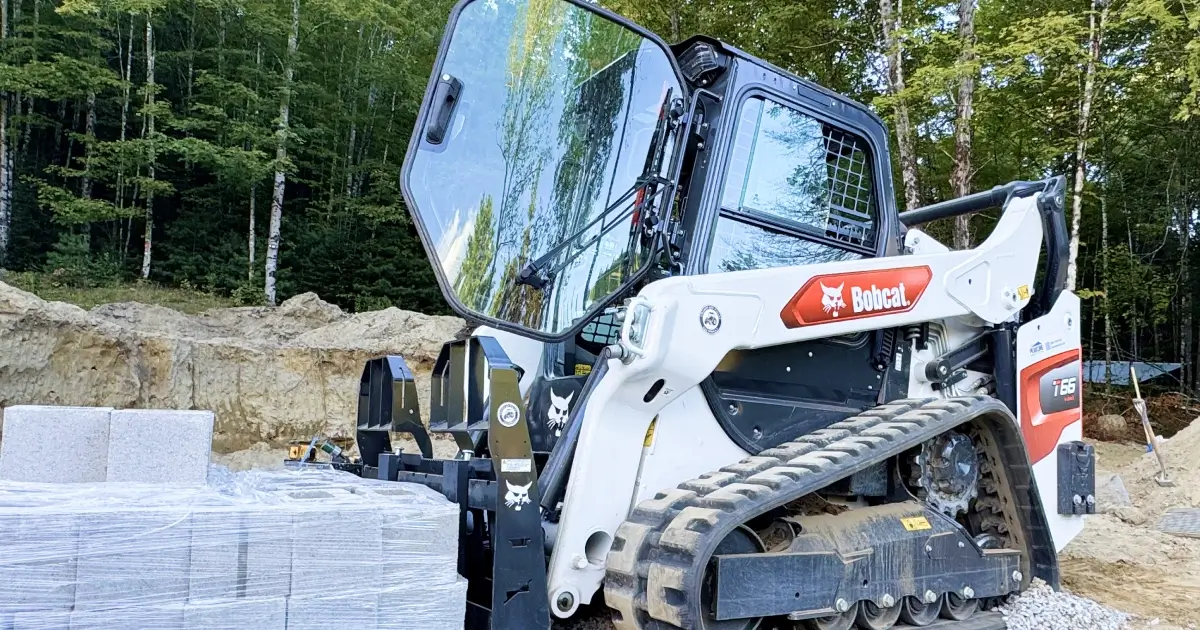
1. Skid steers & compact track loaders
For tight driveways, village lots and in‑town jobs from Barre to Burlington, a skid steer or compact track loader is the workhorse.
Typical winter uses:
- Pushing back snowbanks without destroying lawns or fences
- Loading sand or stone into pickups or dump trailers
- Scraping ice and hardpack from gravel surfaces
- Relocating snow piles in tight commercial lots
On the west side, in places like Richmond, Williston, Essex Junction, and Burlington’s Old North End, a compact machine is often the only tool that can maneuver between parked cars, light poles and narrow alleys.
2. Mini excavators
When something’s broken *under* the surface, the mini‑ex comes out.
Common winter jobs:
- Digging out frozen or crushed culverts
- Cleaning clogged ditches along hilly driveways
- Exposing utility lines for repair
- Pulling stumps or roots that are pushing up drives or walls
Along US‑2 in Marshfield or the hillsides in Huntington, a mini‑ex with a thumb lets you reach over banks and work on slopes without getting a big machine stuck.
3. Mini track loaders
Where access gets really tight, like behind garages in Montpelier, between old barns in Berlin, or along older Burlington neighborhoods, a mini track loader shines. It fits through gates and between obstacles while still moving a meaningful bucket of gravel, sand or snow.
Great for:
- Tight residential driveways where a full‑size skid steer won’t fit
- Moving stacked firewood, pellets and bagged sand closer to the house
- Cleaning up walk‑out basements and retaining walls on steep lots
Attachments That Save You Hours
The right attachment can turn a “never again” job into a “glad we did that” day.
- Buckets with good cutting edges – for scraping ice and hardpack
- Snow pushers or high‑capacity buckets – for relocating snow in lots
- Hydraulic thumbs – for culvert replacement, pulling rocks, handling debris
- Frost rippers – for breaking through frozen top layers so you can dig
- Grading blades – for smoothing rutted camp roads or driveways after a thaw/refreeze cycle
Most of the calls we get are some version of: “I thought a bucket alone would do it… it didn’t.” Attachments matter, especially in January.
Local Materials & Support
Most winter projects aren’t just “machine plus operator.” You also need stone, gravel or sand.
Around Barre and Central Vermont, a lot of folks rely on:
- [R.E. Tucker, Inc.](https://retuckerinc.com/) in Randolph for crushed stone and gravel that hold up under Vermont’s freeze–thaw.
- [Gravel Monkey in South Barre](https://mygravelmonkey.com/locations/vermont/south-barre/) for driveway gravel and crushed stone that match local conditions.
- [Nelson Ace Hardware](https://nelsonacehardware.com/) or [Aubuchon Hardware in Barre](https://www.hardwarestore.com/aubuchon/barre-vt) for hand tools, ice melt, and fittings when you’re mid‑project.
On the weather and travel side, it’s worth bookmarking the NWS Burlington Office for storm specifics and VT 2‑1‑1’s winter page for links to New England 511 and other road condition resources.
Planning Your Rental
Winter rentals are all about timing:
- Watch the forecast, not just the calendar. Storm tracks can jump north or south fast along the spine of the Greens.
- Build in a buffer day. Vermont’s transportation folks talk about “safe roads at safe speeds,” not bare pavement at all costs. The translation: plan on slower hauling when it’s actively snowing or just after.
- Book before a big storm, not after. Once parking bans and snow emergencies go up in towns like Burlington, Colchester and Essex, everybody suddenly wants the same handful of machines.
If you know you’ve got a problem culvert, a shrinking driveway or a rough private road, it’s cheaper to book early than to scramble the morning after a Nor’easter.
When It Makes Sense to Repair
If you already own a skid steer, CTL, excavator or tractor, there’s a line where it’s smarter to fix what you’ve got (especially with the cost of living right now).
Think about diesel repair when:
- The machine is otherwise solid but struggling to start or stay running
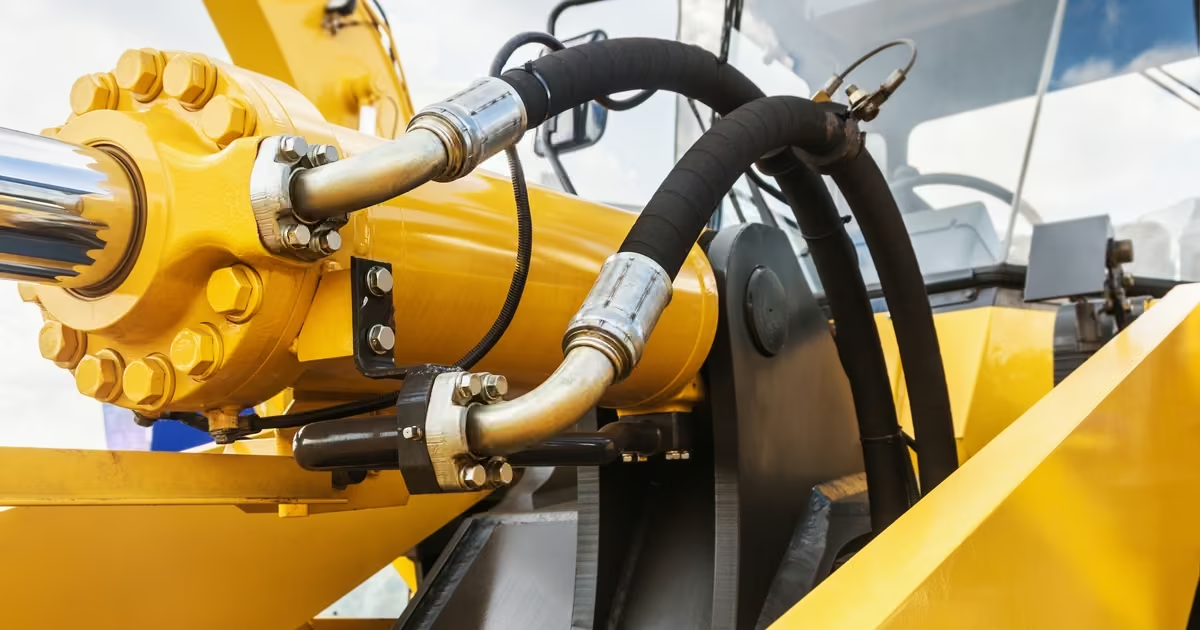
- You’re seeing recurring hydraulic leaks or weird noises
- It’s your primary winter revenue machine (plow truck, main skid steer, etc.)
Lean toward renting when:
- You’ve got a major failure and a busy schedule
- You landed more winter work than your fleet can cover
- You need a specific machine or attachment for a short‑term push
Peakline lives right in the middle of that reality: we rent the machines you need to get work done now, and we wrench on the equipment you already own so it’s ready for the next storm.
Winter Doesn’t Wait!
Whether you’re digging out a frozen culvert on a back road in Topsham, pushing back snowbanks on a tight Richmond lot or re‑crowning a long driveway outside Barre, the right machine for a couple of days can make the difference between “barely surviving winter” and “actually getting ahead of it.”
If you’re looking at a list of winter jobs between Barre and Burlington, Peakline can help you match the right iron to the work, or get your own machines back in the fight!
FAQS
What equipment is most useful in Central Vermont during December and January?
In Central Vermont, the most useful winter equipment usually depends on the job, but common needs include machines for snow movement, driveway access, material handling, cleanup, and property work in frozen or icy conditions.
Is winter a good time to rent equipment in Vermont for property work?
Yes. Winter can be a smart time to rent equipment for snow-related work, access improvements, storm cleanup, and small property projects that need to get done before spring demand increases.
Where can I rent winter-ready equipment near Barre or Montpelier?
Peakline Rental & Repair offers equipment suited for winter work across Central Vermont, including jobs near Barre, Montpelier, and nearby towns where cold-weather reliability and quick delivery matter.