.svg)
Farm Equipment Uptime Through Haying Season
Ask any farmer in Orange County what a breakdown costs and you won't get a number. You'll get a story about a specific field, a specific forecast, and a baler that picked the worst possible afternoon to quit. Hay doesn't wait around here, and neither does the weather that ruins it. In August, equipment uptime and crop quality are the same subject.
The way farms actually stay running through the season is a combination of two things: scheduled maintenance in the gaps between cuts, and a mobile mechanic who comes to the farm when something breaks anyway. A field mechanic who works across brands, on tractors, balers, mowers, loaders, and trucks alike, can turn a lost weather window into a few lost hours.
The Weather-Window Math
A dry-hay window in Central Vermont is often three good days. Sometimes two. Mow on day one, ted and rake, bale on day two or three, and every operation in that chain depends on a machine. If the mower-conditioner goes down on day one, you might still make the window. If the baler goes down with the hay already raked and clouds building over the Worcester Range, you're choosing between rained-on hay and whatever help you can raise by phone.
That's why farm repair in August is a different animal from farm repair in February. The February job can wait for a shop slot. The August job gets measured against a forecast. Any arrangement that amounts to "bring it in and we'll look at it next week" fails the August test, and hauling a tractor off a hill farm in Corinth or Brookfield to a distant dealer fails it twice.
Do the Maintenance Between the Cuts
The cheapest breakdown is the one that happens on a jack stand in the yard, on a rainy day, with the parts already on the bench. Second cut is either in or coming, and the gap before third cut and fall work is the natural service window.
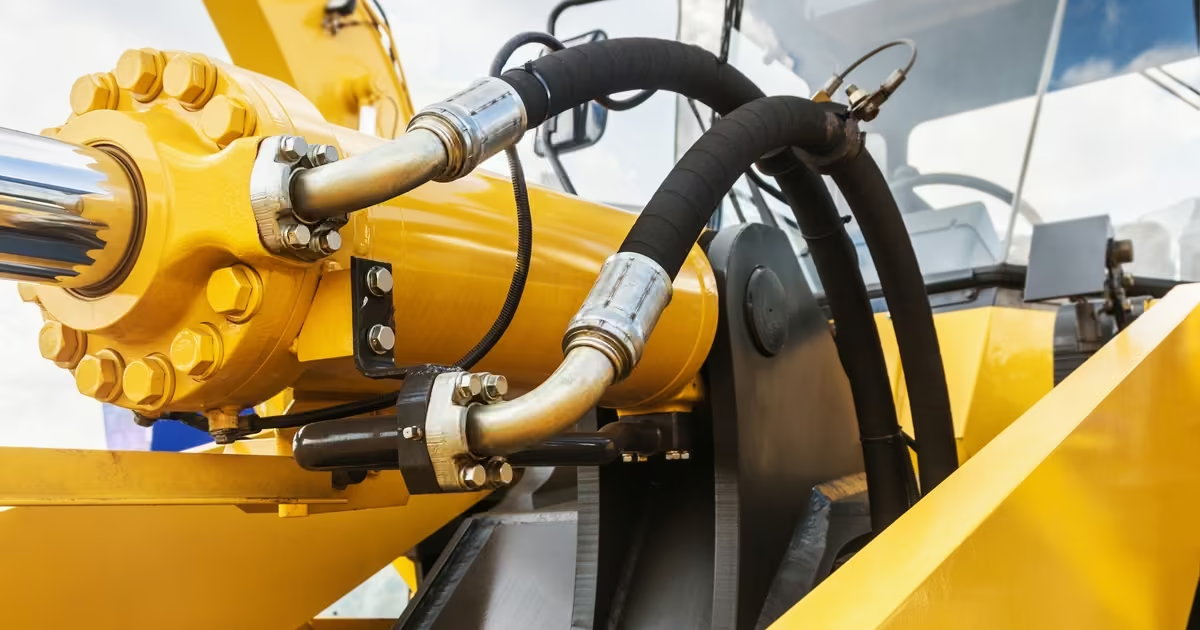
A worthwhile mid-season check covers fluids and filters on schedule, and in dusty haying conditions the air filter deserves more attention than the book suggests. It covers belts, chains, and bearings on the hay tools, since those are the parts that fail suddenly and stop everything, and a bearing that's warm or noisy today is a seized shaft in two weeks. It covers hydraulics: hoses showing cracks, weeping fittings, cylinder seals, quick couplers. Replace a suspect hose now, because a blown hose mid-field costs time and dumps oil on ground you care about. Check tires and tracks for cuts and pressure, since sidehill work punishes both. Check the electrical basics, battery connections, charging output, and the lights, because harvest actually runs on early mornings and late nights. And check PTO shafts and shields, both for function and for safety. UVM Extension's farm safety materials are blunt about PTO entanglement for good reason, and mid-season is a good moment to make sure the shields are intact and spinning free.
If working through that list yourself is one job too many in August, which is a common and completely reasonable answer, that's what scheduled on-farm maintenance is for. A mechanic works through the fleet in your yard while you do literally anything else.
When It Breaks Anyway
No maintenance program prevents everything. What matters then is the response.
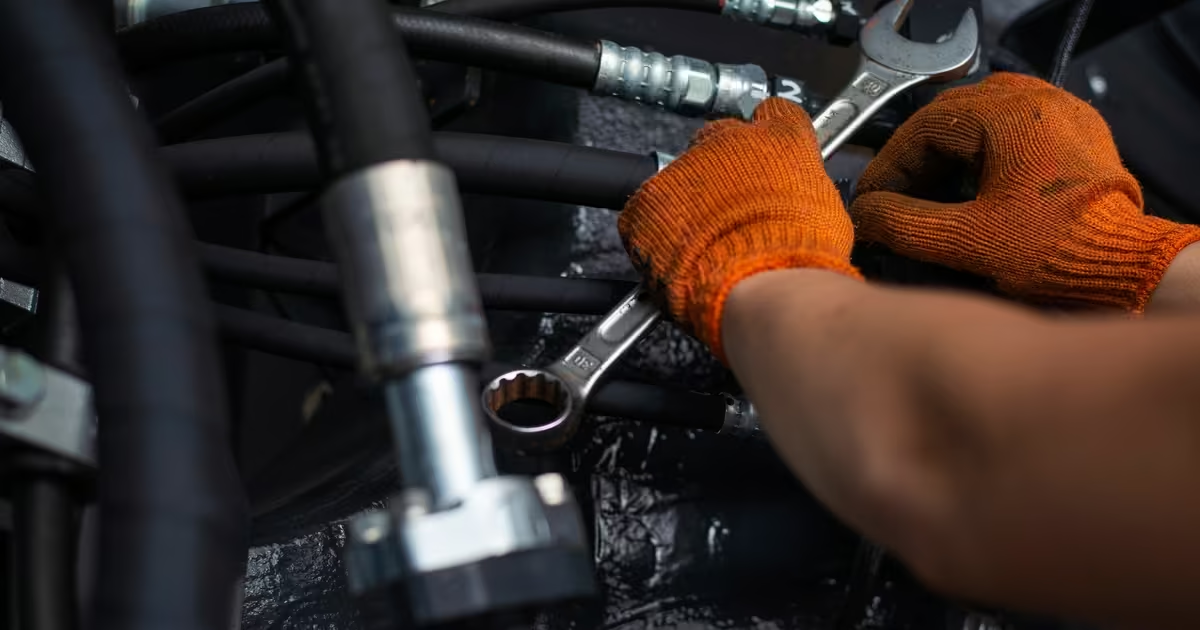
A mobile diesel mechanic reaches the farm with diagnostics, hydraulic repair capability, welding, and common parts on the truck. The usual on-farm calls are tractor no-starts and power loss, hydraulic failures on loaders and implements, electrical gremlins, cooling problems in hot weather, fuel issues, and the endless small welding jobs, the cracked brackets and worn hitch points and broken teeth that farm iron collects.
Two things make farm calls go faster. First, report symptoms precisely. "Cranks but won't fire, half a tank, sat for two weeks" points to fuel. "Died under load with a hot smell" points somewhere else entirely. Model and serial numbers let the right parts ride out on the truck. Second, a mechanic who isn't loyal to one paint color is worth a lot on a Vermont farm, because most farms here run a mixed yard: a couple of tractor brands, a skid steer, a dump truck, maybe an older CAT or Bobcat machine on loader duty. One number that covers the whole yard beats three dealers in three directions.
Renting Through a Breakdown
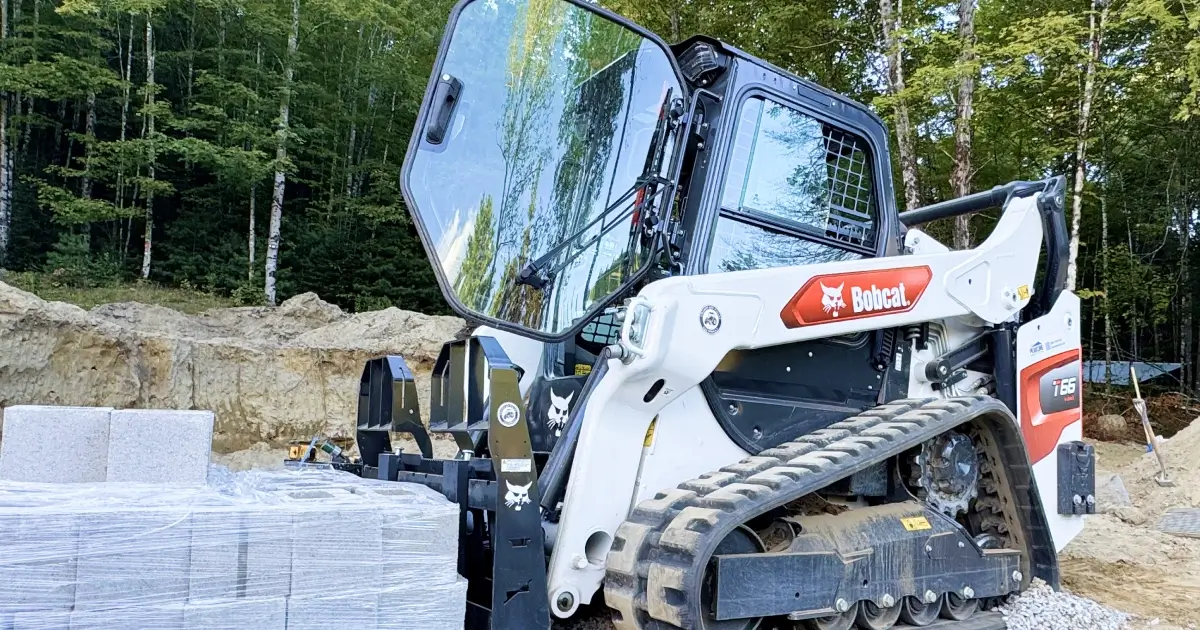
Sometimes the smartest repair decision is to keep working while the repair happens. If the farm's skid steer or loader tractor goes down during heavy feeding, bedding, or bunk work, a short-term compact track loader rental, something like the Bobcat T66, bridges the gap for a few days or a week. It isn't the answer to every breakdown, but for loader work it's often the difference between a disruption and a crisis. A shop that does both rental and repair can set up the bridge machine and the fix in the same phone call.
Farms From Topsham to the River
We work on farm equipment across Central Vermont and the Upper Valley: Topsham, Corinth, Newbury, Bradford, Chelsea, Vershire, Randolph, and over to the New Hampshire side, where the fields don't care about the state line. Field repair, scheduled maintenance between cuts, and rental equipment to bridge a breakdown, all from a shop that understands that in August the forecast is part of the work order.
FAQ
Can a mobile mechanic fix a baler or mower in the field during haying?
Often, yes. Hydraulic failures, bearing and belt replacements, electrical faults, PTO driveline problems, and welding repairs on hay equipment are common field fixes. Some failures, like a major gearbox or knotter rebuild, need shop time, but a field visit usually gets you a fast diagnosis and an honest answer about whether the window is still makeable.
When should Vermont farms schedule preventive maintenance on haying equipment?
Three natural windows: before first cut in late spring, in the gap after second cut, and at fall put-away, when anything you find has all winter to be fixed cheaply. The late-summer check matters most for avoiding harvest breakdowns, because the equipment has been working hard and still has months of heavy use ahead.
Does Peakline work on farm tractors and equipment, or just construction machines?
Both. Peakline's mobile diesel repair covers farm tractors, hay equipment, loaders, skid steers, and farm trucks across brands, alongside construction and CAT equipment. Farms around Topsham, Corinth, Newbury, Bradford, and the surrounding towns can schedule preventive maintenance or call for field repair during the season.