.svg)
Vermont's Short Construction Season: Why Local Equipment Support Protects Your Schedule
Central Vermont gets roughly five and a half serious months of outdoor work, call it mid-May through the end of October, minus whatever weeks the weather takes back. Everything about running equipment here flows from that math. A lost day in Phoenix is a lost day. A lost day in Washington County in August is a measurable slice of your entire year. That, honestly, is the whole case for local equipment support, and it has nothing to do with sentiment.
In a short season, local rental and repair protect your schedule in ways a distant provider can't match by trying harder: faster delivery over roads the driver already knows, same-day answers from people with the authority to act, field service that actually reaches hill farms and back-road sites, and a rental fleet backed by an on-site repair shop instead of a call center.
The Season Is the Constraint
Contractors here don't really plan projects. They plan sequences: site work that has to finish before the concrete, concrete before the frame, paving before the plants close for the season. Farms sequence around cuts and harvest. Towns sequence grant-funded road and culvert work against completion deadlines. Better Roads awards, for example, come with a finite construction window, and a town crew that loses its loader for ten days in August can lose the project year.
When the season is the constraint, responsiveness becomes worth more than almost anything else a supplier can offer. That's not a slogan, it's schedule protection you can count in days.
Where Distance Breaks Down
National rental chains and distant dealer service departments are genuinely good at what they're built for: dense markets, standard logistics, high volume. Rural Central Vermont breaks their assumptions in a few specific, predictable ways.
Delivery is the first. Routing software doesn't know that the shortest path to your site includes a posted bridge, a Class 4 section, or a hill that a loaded trailer shouldn't come down. A local yard's driver has usually been up your road, or one exactly like it, sometime this month.
Then there's the support radius. When a rented machine faults out on a Saturday, the only question that matters is who can physically reach you, and when. Support that has to travel an hour and a half each way, dispatched through a regional queue, turns a two-hour problem into a two-day one.
Decision speed is quieter but just as real. "Let me check with the branch manager" means something different at a national counter than at a shop where the person answering the phone owns the answer. Swap a machine? Extend a rental because it rained? Send the service truck first thing? A local outfit can just say yes.
And there's accountability of the old-fashioned kind. In a place this size, the person who rented you the machine is going to see you at the store, the transfer station, or town meeting. That was keeping businesses honest around here long before review sites existed.
None of which makes national providers bad actors. Their model is simply optimized for somewhere else.
What Rental-Plus-Repair Buys You
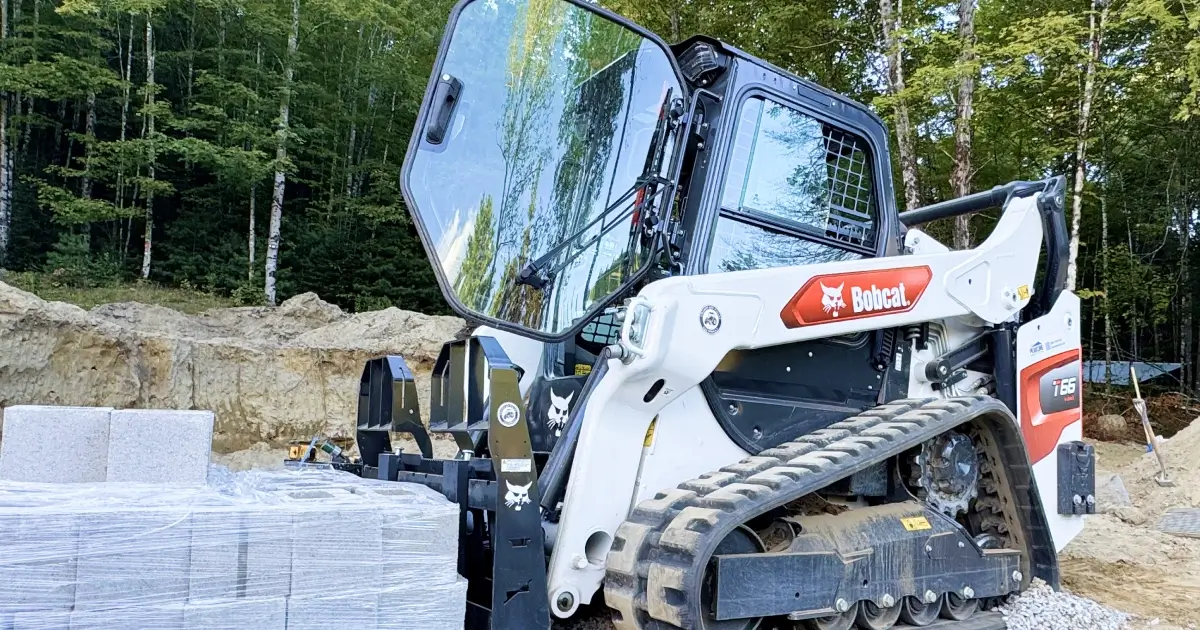
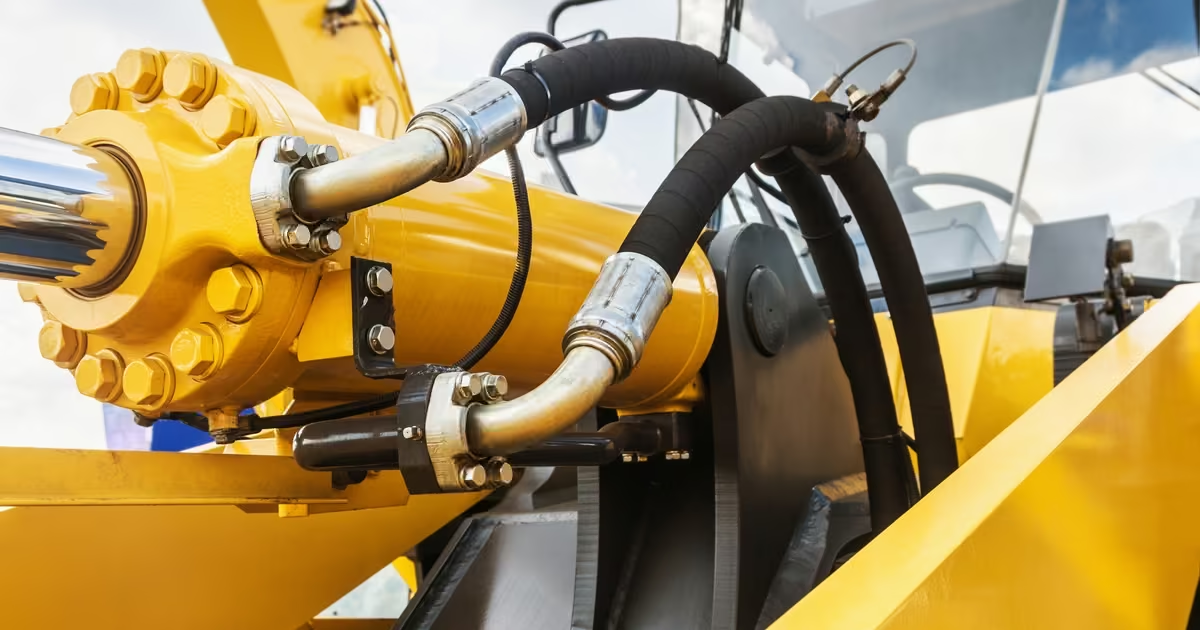
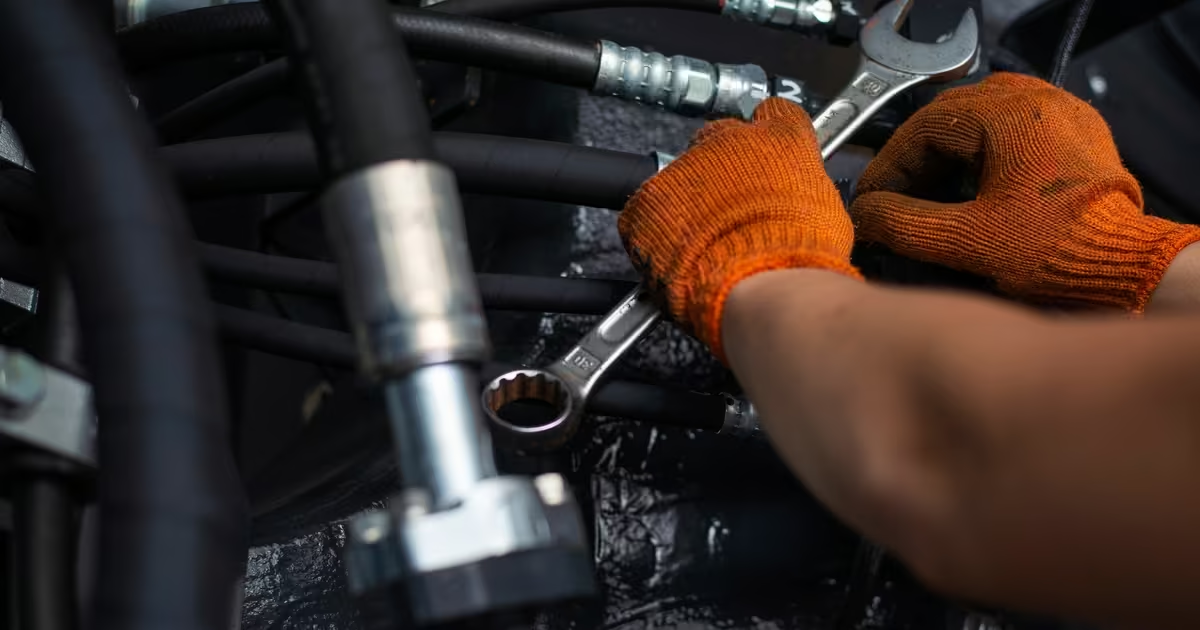
There's a structural advantage in renting from a shop that also repairs equipment for a living, and it shows up in three places. The fleet itself, first: machines maintained in-house by working mechanics go out in genuinely job-ready shape, because the people who fix them also answer the phone when they don't. Mid-rental problems, second: hoses blow on anyone's equipment, but when the rental yard is the repair shop, the answer is a service truck or a swap, not a claim ticket. And third, everything around the rental. The same shop can service your own machine while you're renting a second one, weld the attachment you broke, or bridge a breakdown with a rental. One relationship covers the whole equipment side of your operation.
The Money Stays Close, and So Does the Capability
There's a longer-run point that Central Vermont's contractors and select boards understand in their bones: rental and repair dollars spent locally maintain local capability. A regional equipment shop that stays busy keeps service trucks, mechanics, parts inventory, and rental iron stationed within reach of Topsham, Barre, Bradford, Randolph, and everything between. Send those dollars to a distant branch and, over time, the nearest service truck gets farther away for everyone. In a region where distance already costs money, that's a quiet infrastructure loss. We've written before about how rental dollars leaving Central Vermont cost more than the invoice shows, and the summer schedule crunch is where that cost stops being abstract.
Putting This to Work Before the Season Ends
A few practical moves for the last stretch of 2026. Book your September and October rentals now, because the end-of-season rush is real and everyone is chasing the same closing window. Get mid-season maintenance done on your own equipment before the fall push, since a scheduled service call beats an October emergency every time. And line up your winter shop work early. Machines that limp through the fall should have their rebuilds booked before everyone else's are.
This is what Peakline exists for: rental machines and field repair based in Topsham, serving Orange, Washington, and Caledonia counties and the Upper Valley, close enough that "we'll be there" means it. If your schedule depends on equipment this fall, put a local number in your phone before you need it.
FAQ
Is local equipment rental actually cheaper than a national chain?
Sometimes on the headline rate, and often on the total. Local rental tends to win on delivery cost, since the runs are shorter, on avoided downtime, since support arrives faster, and on flexibility with extensions and swaps. Compare the delivered, supported, out-the-door cost for your specific site and dates rather than the base day rate, and get a direct local quote, since rates vary by machine and season.
Why is Vermont's construction season so short, and how should I plan around it?
Between spring mud season, fall freeze-up, and winter, most Central Vermont earthwork happens between roughly mid-May and the end of October. Plan sequences with weather buffers, get dirt work started as early as the ground allows, finish drainage and seeding by mid-September, and book equipment and repairs ahead through July, August, and September, when demand peaks.
What areas does Peakline serve for equipment rental and mobile repair?
Peakline, based in Topsham, serves Central Vermont and the Upper Valley, including Barre, Montpelier, Berlin, Bradford, Fairlee, Wells River, Newbury, Chelsea, Corinth, Randolph, Williamstown, Northfield, Groton, Plainfield, East Montpelier, and the surrounding towns in Orange, Washington, and Caledonia counties, plus nearby western New Hampshire for field service and delivery.