.svg)
Mini Excavator Rental for Summer Drainage and Culvert Projects in Central Vermont
Summer is when Central Vermont fixes its water problems. The ground is firm, the streams are low, and the washouts that mud season and spring storms exposed are still fresh in everyone's mind. If you've got a driveway culvert that's crushed or too small, a ditch that quit carrying water, or a low spot that turns into a pond every thunderstorm, July and August are the months to deal with it. For most of these jobs, a rented mini excavator is the right tool.
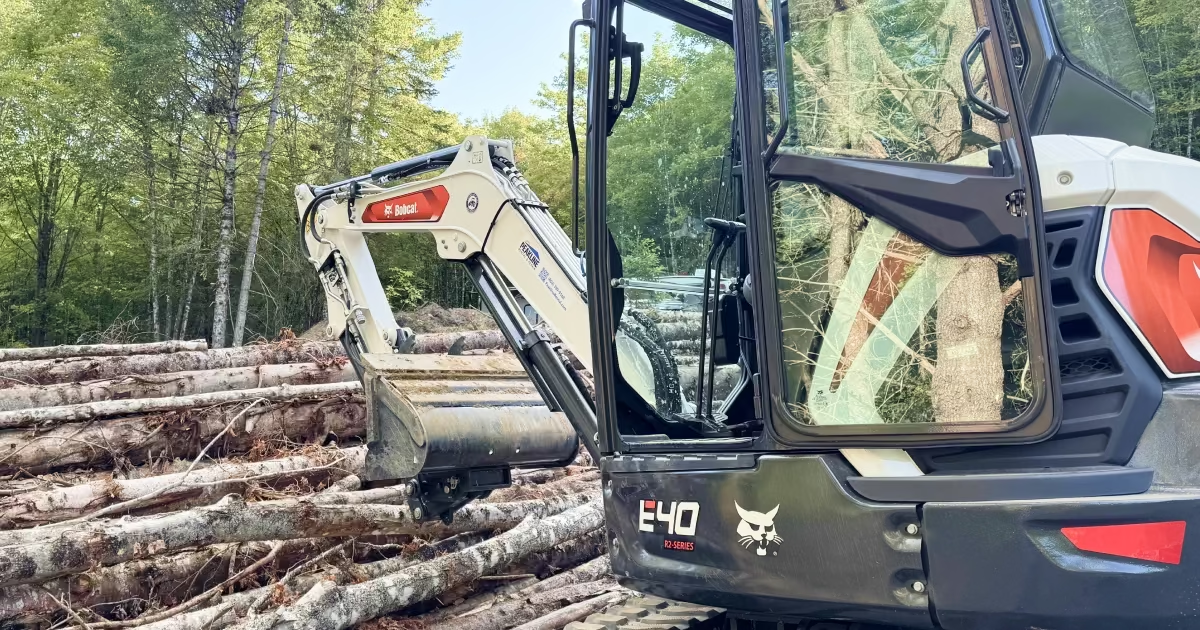
The quick version: for the drainage work most landowners and small contractors take on around here, meaning driveway culvert replacements, ditch cleaning and reshaping, swales, and setting stone at pipe ends, a 4-ton machine like the Bobcat E40 covers the digging, the lifting, and the rough grading. Rent it locally with delivery, plan the work inside a dry stretch, and most culvert swaps are a one-day dig.
Why This Work Belongs in July and August
Water does most of its damage here in the other ten months. Spring melt and summer downpours find every undersized pipe and silted ditch, and after the flooding Vermont has seen in recent years, nobody is casual about drainage anymore. The catch is that you can't fix a culvert well when the ground is saturated or the stream is up.
Midsummer gives you what the job needs. Ditches and small streams are usually at their lowest flow of the year. The ground is firm enough that a tracked machine travels without tearing up fields and lawns, and trench walls hold their shape. And anything you build now, whether it's new gravel, stone, or a seeded slope, gets weeks to settle in before fall rain tests it.
Towns run on the same calendar. Vermont's Better Roads Program, run by the Agency of Transportation, funds municipal culvert and erosion-control projects, and awarded work gets built in this same summer window. If your town road crew looks busy right now, that's part of why. It's also why private drainage projects shouldn't wait for a quieter time. There isn't one.
What a Mini Excavator Does on a Drainage Job
A machine in the E40's class, roughly 4 tons with a backfill blade and a long arm, handles nearly every task on a typical residential or small commercial drainage project.
Digging out the old culvert
Most driveway culverts in Orange and Washington County are 12 to 18 inch pipes buried three to five feet under the driving surface. The excavator opens the trench, lifts the old pipe out, and piles material neatly to one side so you aren't rebuilding the whole driveway when you're done.
Setting the new pipe
The bucket places bedding gravel, a thumb or a chain handles the pipe sections, and the blade backfills in lifts you can compact as you go. The part that matters most is getting the pipe on a consistent slope so it cleans itself, and that's far easier to do from a seat with fine hydraulic control than with a shovel and a helper.
Ditches and swales
With a ditching or grading bucket you can pull a clean, consistent ditch line, reshape shoulders, and cut shallow swales that steer roof and driveway runoff away from the house. On a long gravel driveway, re-establishing the ditch and the crown often does more for the surface than a load of new material.
Stone at the pipe ends
Riprap at the inlet and outlet is what keeps a good installation from eroding out in the first big storm. An excavator lets you place stone where you want it instead of dumping it and hoping, which matters on the steep grades you find around Corinth, Vershire, Groton, and the hill roads off Routes 302 and 25.
When a Mini Excavator Is Enough, and When It Isn't
It saves money to get the sizing conversation right in both directions.
A 4-ton mini excavator handles driveway culverts up to about 24 inches, ditch cleaning and reshaping, curtain drains and downspout drainage, small pond inlet and outlet work, and trenching for water or power lines while you've got the machine anyway.
Think bigger, or call a contractor, when the culvert crosses an actual stream, when the pipe is 36 inches or larger, when the trench runs deeper than about six feet, or when the job involves a road that has to stay open to traffic. In-stream work in Vermont can also require a stream alteration permit through the Department of Environmental Conservation, and bigger structures come with sizing requirements, so that category of job deserves a phone call before a rental.
When in doubt, describe the whole job before you book. Part of what you're paying a local yard for is somebody who knows the roads between Topsham and Barre telling you honestly whether the E40 will do it or whether you're describing a two-machine job.
Planning Around Weather and Access
Two things separate the smooth drainage projects from the frustrating ones.
First, watch the weather window, not just the forecast. You want the trench open and closed inside one dry stretch. An open culvert trench that takes two inches of overnight rain turns into a mess that adds a day to the job. The digging on most driveway culvert swaps fits in a day, so have the machine delivered the afternoon before and start early.
Second, plan the delivery. Mini excavators come in on a trailer, and a lot of the places that need drainage work, like camps off Class 4 roads near Groton or hill farms in Corinth and Chelsea, have tight turnarounds and soft shoulders. When you book, mention gates, bridges, low wires, and steep grades. A local driver has probably been up a road like yours before, but the delivery goes better when nobody's guessing.
Rent Locally, Dig Once
Drainage work rewards doing it right the first time: correct pipe size, correct slope, compacted backfill, protected ends. The machine is honestly the easy part, as long as it shows up on time, well maintained, with somebody local to call if anything acts up mid-job. We rent the Bobcat E40 with delivery across Central Vermont and the Upper Valley, from Barre and Montpelier over to Bradford, Fairlee, and Wells River, and we're glad to talk through your project before you commit to a machine size.
FAQ
What size mini excavator do I need to replace a driveway culvert in Vermont?
For a typical 12 to 18 inch driveway culvert set three to five feet deep, a 4-ton machine like the Bobcat E40 has the dig depth, lift capacity, and blade to handle the excavation, the pipe setting, and the backfill. Culverts of 36 inches and up, deep trenches, or stream crossings usually call for a bigger machine and sometimes permits.
Do I need a permit for culvert work in Vermont?
It depends where the pipe is. Replacing a culvert under your own driveway usually needs, at most, a town driveway or access permit, so check with your town clerk or road foreman. Work in an actual stream can require a stream alteration permit from the Vermont Department of Environmental Conservation, and culverts under town roads belong to the municipality.
Does Peakline deliver rental excavators to rural properties?
Yes. Peakline delivers rental equipment, including the Bobcat E40, throughout Central Vermont and the Upper Valley, hill roads and long gravel driveways included, around Topsham, Corinth, Chelsea, Groton, and Bradford. Mention access details like steep grades, gates, or tight turnarounds when you book so the drop-off goes smoothly.