.svg)

Mobile Diesel Repair in Peak Season: Keeping Central Vermont Jobs Moving
There's no good time for a machine to go down, but late July is close to the worst. Every crew in Central Vermont is mid-project, every schedule assumes the weather holds, and every day of downtime lands on something that matters, whether that's a foundation pour, a paving window, or second-cut hay. This is the season mobile diesel repair was built for.
If you're wondering whether you can get a mobile diesel mechanic in Central Vermont, the answer is yes. A field mechanic comes to your job site, farm, or roadside with a service truck set up for diagnostics, hydraulic repairs, electrical troubleshooting, welding, and most common failures, so your excavator, loader, truck, or tractor gets fixed where it sits instead of riding a lowbed to a shop.
What Downtime Actually Costs in July
Think about what a stopped excavator really takes with it. You're not just losing the machine. You're losing the operator standing next to it, the crew sequenced behind it, the trucking you scheduled around it, and maybe the weather window the whole job was planned inside. Vermont's outdoor season is short enough that summer days aren't interchangeable with October days. Lose three of them and a comfortable project is suddenly tight against fall.
Then add the hauling. Getting a 20-ton machine from a job site in Chelsea or Northfield to a dealer shop means a lowbed, permits if the load needs them, a driver, and hours of road time each way, often for a repair that takes less time than the transport did. For equipment that's hard to move, the trip can cost more than the fix.
Mobile repair flips that math. You move the mechanic instead of the machine.
What Gets Fixed in the Field
A well-equipped service truck handles more than most people expect.
Diagnostics
Modern diesel equipment will mostly tell you what's wrong if you can talk to it. Field diagnostics cover engine fault codes, sensor and electrical issues, regen and emissions problems, and hydraulic pressure testing. An accurate diagnosis on-site is usually the difference between a targeted repair and a day of guessing.
Hydraulics
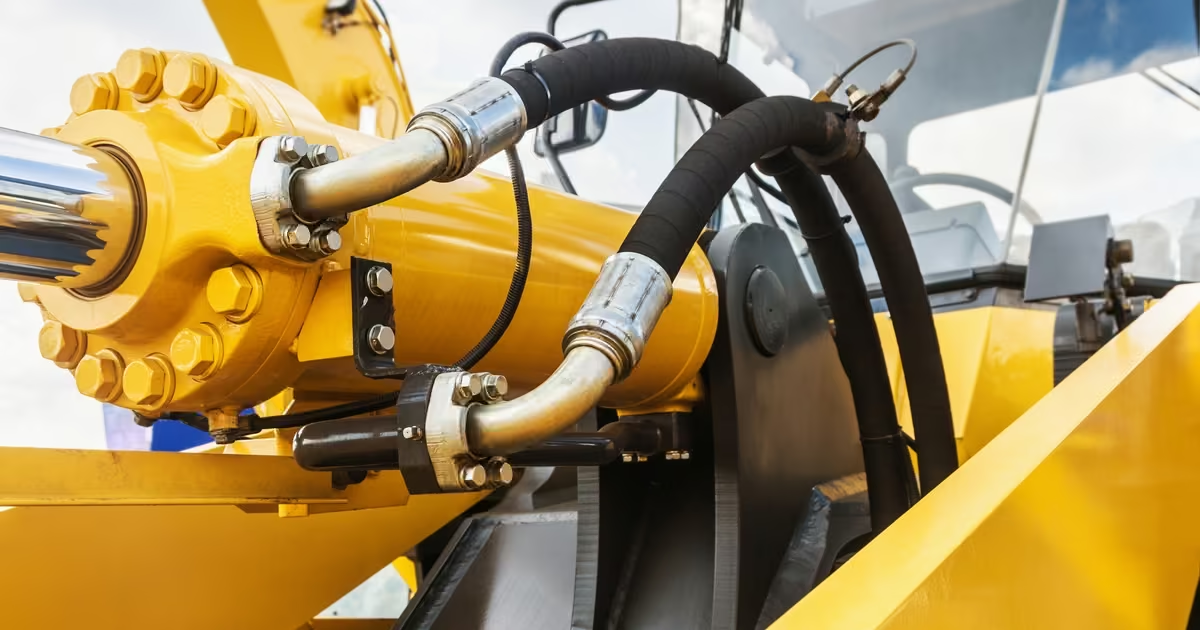
Blown hoses, leaking cylinders, failed couplers, tired pumps. These are the classic mid-job killers, and hose replacement along with a lot of cylinder and valve work happens right on site. Given how much of the work around here runs on hydraulics, from excavators and loaders to log trucks and dump bodies, this is the most common field call by a wide margin.
Engine and fuel
Fuel contamination, filters, injectors, cooling system failures, belts, starters, alternators, batteries. Summer heat is hard on cooling systems, and a machine that runs hot on a 90-degree afternoon working a slope near Waitsfield needs attention before it turns into an engine job.
Electrical
Wiring damage, charging problems, safety-interlock faults, lighting. Rodent damage from winter storage has a way of announcing itself in July.
Welding and fabrication
Cracked buckets, broken brackets, worn pins and bushings, loader arm repairs. Field welding keeps attachments working until a bigger rebuild fits your schedule.
Some jobs still belong in a shop, and it's worth saying so plainly: major engine overhauls, transmission rebuilds, and undercarriage work that needs a machine safely supported for days. A good mobile mechanic tells you the difference honestly, and can often get a machine stabilized and moving under its own power so the transport is easier and cheaper when it does have to happen.
Who Uses Field Service Around Here
Excavation and site contractors get the obvious win: repairs at the pit, the pad, or the road job, scheduled around the crew instead of the other way around. Early-morning and end-of-day calls mean a machine can break at three in the afternoon and be working at seven the next morning.
Farms might benefit most of all. During haying, a down baler or tractor isn't an inconvenience, it's crop quality slipping by the hour. A mechanic who works on diesel equipment generally, not just one brand, can keep a mixed yard of tractors, skid steers, and trucks running from a single phone number. We go deeper on haying-season uptime in our August farm post.
Town crews run graders, loaders, and trucks through their heaviest season right now, often out of small garages with no dedicated mechanic. On-site service in places like Orange, Washington, Topsham, and Newbury keeps summer road projects on schedule, including grant-funded culvert and drainage work that comes with completion deadlines.
How to Make a Service Call Go Fast
A little preparation makes field repairs quicker and cheaper. Have the machine's make, model, and serial number, the hour reading, and any fault codes on the display. Note what the machine was doing when it failed, and any sounds, smells, or leaks. Photos help a lot, since a picture of the leak or the code screen lets the mechanic load the right parts before driving out. And describe the access honestly. "It's at the top of a skid road off a Class 4 in Groton" changes what truck and gear come out. Rural access is normal here, but say so up front.
One more thing, and it's the cheapest advice in this whole post: don't run it to failure. A machine losing coolant or making a new noise is a repair. A machine run until it stops is often a rebuild. Shutting down early might be the best financial decision you make all summer.
Field Service Built for This Terrain
Mobile repair works best when the mechanic already knows the territory: which roads take a service truck easily, how far the parts run is, what tends to break on machines that spend their lives on Vermont hills and gravel. We run mobile diesel repair throughout Central Vermont and into western New Hampshire, serving contractors, farms, and towns from Montpelier and Barre across to Bradford, Wells River, and the river towns. One call and the shop comes to you.
FAQ
What kinds of equipment can a mobile diesel mechanic work on?
Most field mechanics handle a wide range of diesel equipment: excavators, skid steers and track loaders, dozers, backhoes, farm tractors and implements, log trucks, dump trucks, and generators. Diagnostics, hydraulics, electrical, fuel systems, and welding cover the majority of on-site calls. Major overhauls still go to a shop.
Is mobile repair more expensive than bringing equipment to a shop?
Mobile service usually carries a travel or service-call charge, but for heavy equipment it's often cheaper in total once you count lowbed transport both ways and the extra days of downtime. For machines that are difficult or expensive to move, on-site repair usually wins clearly.
Does Peakline offer emergency field service during the summer?
Yes. Peakline runs mobile diesel repair and emergency field service across Central Vermont through the construction season, and breakdowns that have a crew or a harvest stopped get priority. Call with the machine details, the location, and the symptoms, and you'll get a straight answer on timing and whether the repair can happen on-site.