.svg)

Skid Steer or Mini Excavator? Picking the Right Machine for Vermont Driveway Repair
Every summer we get some version of the same phone call, usually on a Thursday. The driveway's a mess, there's a free weekend coming, and do I want the excavator or the skid steer? It's a fair question. The two machines fix different problems, and renting the wrong one is how a Saturday project turns into a long weekend.
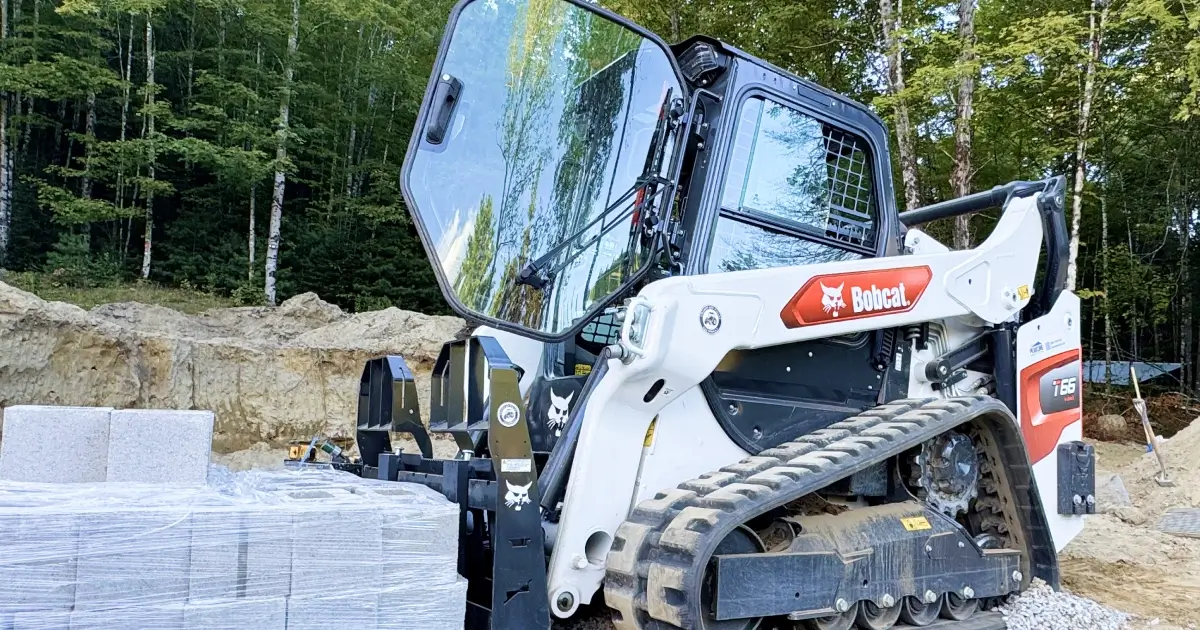
Here's the short answer. If the trouble is on the surface of the driveway, meaning potholes, washboard, or gravel that's wandered off, you want a skid steer or compact track loader like the Bobcat T66. If the trouble is under or beside the driveway, meaning a bad culvert, ditches that don't drain, stumps, or a bank that needs cutting back, you want a mini excavator like the Bobcat E40. Full rebuilds usually take both, one after the other.
Start by Diagnosing the Driveway
Central Vermont driveways fail in predictable ways, and the failure tells you which machine to rent.
If the problem is on the surface, it's loader work
Potholes and washboard mean the surface has lost its shape and its fines. The fix is to cut or scarify the surface, add material where it's thin, put the crown back, and compact it. If your gravel has migrated, and after a few years it's all in the ditch and on the lawn at the bottom of the hill, the fix is recovering what you can, topping up with new material, and regrading. Soft spots and ruts are often a base problem underneath, but the first move is usually cutting out the bad area and rebuilding it with better material, which is bucket work if it's shallow.
If the problem is water, it's excavator work
Washouts along the edges or down the wheel tracks mean water is running down or across the driveway instead of beside it. That calls for re-cutting ditches, clearing or adding culverts, and putting water bars on the steep sections. A culvert that's crushed, rusted out, or undersized has to come out and be replaced, which is a dig job we covered in detail in our culvert and drainage post. And springs and seeps, which are common on hillside driveways in towns like Corinth, Vershire, and Williamstown, want a curtain drain or stone-lined ditch to catch the water before it reaches the road. All of that is trenching.
One thing we tell people constantly: gravel problems are usually water problems in disguise. Regrade a driveway without fixing the drainage and you'll be renting again next summer.
What Each Machine Is Actually Good At
The compact track loader
The T66 is a material-moving and grading machine. With a bucket it carries and spreads gravel fast, and the tracks keep it steady on slopes without chewing up soft ground. The attachments are where it earns its keep. A grader or land plane attachment re-crowns and smooths a gravel surface far better than back-dragging with a bucket. A landscape rake pulls the bigger stone up out of the surface. An auger will set fence posts and gate posts while you have the machine, and pallet forks will move culvert pipe, stone, and lumber around the property.
For a quarter-mile driveway that needs ten yards of gravel spread and shaped, the T66 will do in an afternoon what a tractor loader does in a day and a wheelbarrow does in a lifetime.
The mini excavator
The E40 digs, lifts, and places with precision. On driveway projects that means ditches with a consistent depth and slope, culvert trenches, stumps where the driveway is getting widened, cutting into a bank to open up a bad corner, and setting stone exactly where you want it. The backfill blade handles some light grading, but make no mistake, it's a digging machine. Spreading twenty yards of gravel with an excavator is slow, clumsy work you'll regret by noon.
A Few Scenarios We See Every Summer
Long gravel driveway, potholes and washboard, but the drainage basically works: that's a skid steer with a grading attachment and a gravel delivery timed for the rental. One machine, one weekend.
Steep driveway that washes out in every big storm: that's the excavator. The surface damage is a symptom. The cure is ditching, water bars, and maybe a new culvert at the bottom. You can tidy the surface with the blade at the end, or budget a second short rental for the loader.
Complete rebuild with new base, new drainage, and new gravel: both machines, in sequence. Excavator first for the ditches, culverts, and cutting out bad base, then the loader for placing, spreading, and shaping. Renting both from the same local yard means one delivery plan and one person to call.
Fixing the driveway and clearing the brush along it: a track loader with a brush cutter or grapple gets you both jobs in one rental.
Timing and Ground Conditions
July and August are the forgiving months, but summer thunderstorms still count. Tracked machines are much easier on lawns and soft shoulders than wheeled ones, which is a big part of why compact track loaders have mostly replaced wheeled skid steers for rural Vermont work. Even so, plan your grading for a dry day. Gravel shapes and compacts best with a little moisture in it, but a freshly graded surface or an open ditch doesn't love a two-inch downpour. If you can, finish grading early enough in the rental to drive on it a bit and let it tighten up before the machine goes back.
The Choice Gets Easier With a Local Yard
Machine selection is exactly where a local rental outfit earns its keep. Tell us the length, the grade, and what the driveway does in a storm, and somebody who has driven roads like yours can tell you whether it's a T66 job, an E40 job, or both, and which attachments are worth adding. We rent both machines with delivery throughout Central Vermont, from Barre and East Montpelier out to Chelsea, Randolph, and the Bradford and Fairlee side of the river, and we would much rather match you to the right machine than rent you the wrong one twice.
FAQ
Can I fix a gravel driveway with just a skid steer?
If the problem stays on the surface, yes. A compact track loader with a grading attachment can cut, re-crown, and re-compact a gravel driveway effectively. If water is causing the damage, you'll also need ditch, culvert, or drainage work, and that's mini excavator territory.
Is a mini excavator or a skid steer easier for a beginner?
Most first-time renters find the mini excavator more intuitive for digging, since you work from one spot with two joysticks. A skid steer asks you to drive and run the bucket at the same time, which takes more coordination. Either way, get a controls walkthrough at delivery and spend your first half hour practicing away from anything expensive.
What does it cost to rent a skid steer or mini excavator in Central Vermont?
Rates depend on the machine, the rental length, and the attachments, and daily, weekend, and weekly pricing are structured differently. Rather than trusting generic national numbers, call a local yard like Peakline with your dates and a description of the project, and you'll get a direct quote that includes delivery to your site.